Eight Peaks Partners Group is an investment and consulting firm based in Tokyo. We serve clients expanding in both directions, going into Japan and from overseas, and vice versa. We also co-invest in some of our clients and their projects.
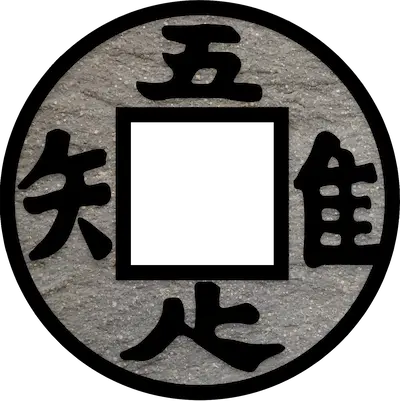
The logo mark of Eight Peaks Partners is derived from the tsukubai of Ryōan-ji, a temple in Kyoto, Japan.
Ryōan-ji (Shinjitai: 竜安寺, Kyūjitai: 龍安寺, The Temple of the Dragon at Peace) is a Zen temple located in northwestern Kyoto, Japan. It belongs to the Myōshin-ji school of the Rinzai branch of Zen Buddhism. The temple garden is considered to be one of the finest examples of a kare-sansui, a Japanese rock garden, or zen garden, in Japan.
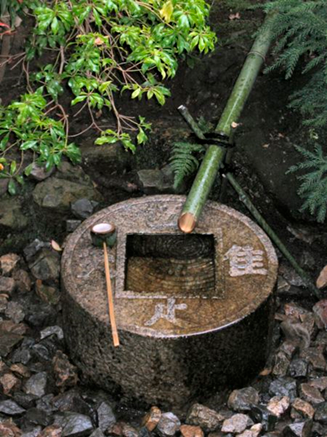
Ryōan-ji also has a teahouse and tea garden, dating to the 17th century. Near the teahouse is a famous stone water basin, with water continually flowing for ritual purification. This is the Ryōan-ji tsukubai (蹲踞), which translates literally as “crouch;” because of the low height of the basin, the user must bend over to use it, in a sign of reverence and humility. The kanji written on the surface of the stone are without significance when read alone. If each is read in combination with 口 (kuchi), which the central bowl is meant to represent, then the characters become 吾, 唯, 足, 知. This is read as “ware, tada taru (wo) shiru” and translates literally as “I only know (what is) enough” (吾 = ware = I, 唯 = tada = merely, only, 足 = taru = be sufficient, suffice, be enough, be worth, deserve, 知 = shiru = know).
The meaning of the phrase carved into the top of the tsukubai is simply that “what one has is all one needs” and is meant to reinforce the basic anti-materialistic teachings of Buddhism. The absence of a dipper is intended to imply that the water is for the soul only and that it is necessary to bend the knee in humility in order to receive its blessing.
From the website of the Ryoanji Temple
中央の水口を「口」の字に見立て、周りの四文字と共用し「吾唯足知」【ワレタダタルコトヲシル】と読む
これは、釈迦が説いた「知足のものは、貧しといえども富めり、不知足のものは、富めりといえども貧し」
という「知足」の心を図案化した佛教の真髄であり、また茶道の精神にも通じる。 また、徳川光圀の寄進とされる。
The central water mouth is likened to the character “mouth”, and it is shared with the surrounding four characters.
This is what Buddha preached, “Those with wisdom are rich, even if they are poor, and those with unknown feet are poor, even if they are rich.” It is the essence of Buddhism, which is a design of the spirit of “knowledge”, and also leads to the spirit of the tea ceremony.
A tsukubai (蹲踞?) is a small basin provided in Japanese Buddhist temples for visitors to purify themselves by the ritual washing of hands and rinsing of the mouth (perform ablutions). This type of ritual cleansing is also the custom for guests attending a tea ceremony. Tsukubai are usually of stone, and are often provided with a small scoop, laid across the top, ready for use. A supply of water is provided via a bamboo pipe called a kakei.
Is this carving possibly connected with Chapter 33 of the Daodejing or Tao Te Ching?
Chapter 33
Those who understand others are intelligent
Those who understand themselves are enlightened
Those who overcome others have strength
Those who overcome themselves are powerful
Those who know contentment are wealthy
Those who proceed vigorously have willpower
Those who do not lose their base endure
Those who die but do not perish have longevity.