Yuichi supervises the execution of transactions and the daily management of this company. He personally handles many relationships with institutional investors.
He is a specialist in marketing funds and advising pensions and institutional investors. He has over 20 years’ experience in this role, and before that had practical investment management experience.
He started his career at Nomura Securities, where he handled international investments and domestic marketing from offices in both Japan and the United States. He has held positions in asset management and pension marketing at Chase Trust Bank, Barclays Nikko Asset Management and other firms. He was Partner and Chief Operating Officer at Triple A Partners Japan.
Yuichi is a Japanese native, raised in Japan, educated at Keio University. He holds securities marketing registrations in Japan. He speaks fluent Japanese and English.
Frank has extensive experience in financial markets and has spent the last 40 years in Asia. During the last 20+ years in Japan, he has been marketing hedge funds, private equity, infrastructure funds and venture capital funds to institutional investors; assisting with inbound financing into Japanese solar projects; and structuring direct investments into private companies and real estate.
Previously, Frank founded and ran Triple A Partners Japan, a boutique investment bank and fund placement agent. Earlier, he was Head of Alternative Investments for North Asia at HSBC; and Head of Asia-Pacific Project Finance at Bank of America. He holds securities marketing registrations in Japan.
Frank is an American citizen, born and raised in Tokyo, and a permanent resident of Japan. He was educated primarily in the USA and holds a BA from Princeton University.
We offer business consulting, corporate introductions, corporate finance, investment facilitation, and direct investment ourselves. We work with appropriate partners to be in full compliance with financial regulations; to conduct market research; and to open introductions to top level companies.
Using our long business experience and wide personal networks, we bring together growing companies with corporate customers and investors. Through our careers, we have track records of completed transactions involving financial market trading and execution; share placement, brokerage and fund placement; investment advisory and asset management; equipment leasing and project finance; investment banking and mergers & acquisitions; real estate finance; private equity; and venture capital.
Japan is a trusted partner with capital, engineering, business experience and expertise, and a risk appetite for coherently explained innovation. Japanese companies and people are seeking not just one-direction flows of investment or customers. They are seeking two-way flows of co-investments, co-production, and co-consumption.
We seek to serve clients aiming for both impact and profit in the near term as well as the long term. Both founders have lived and worked in Japan and America. We bring bicultural fluency and business experience in both countries.
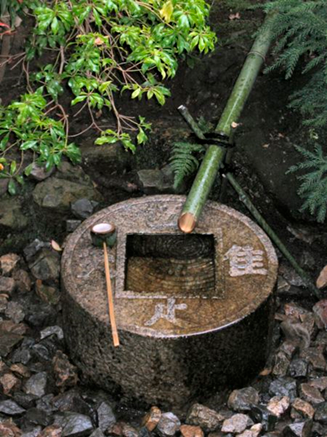
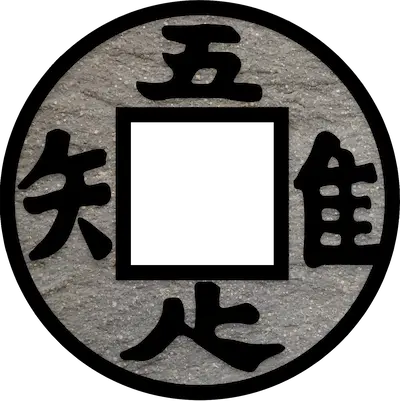
These Japanese characters appear on a 17th century stone basin at Ryoanji Temple in Kyoto. They form an important Zen saying that can be translated as “I know what is just enough.” It is also an appropriate symbol of New Japan, expressing a fresh approach to change with intact age-old values.
Read more.
The logo mark of Eight Peaks Partners is derived from the tsukubai of Ryōan-ji, a temple in Kyoto, Japan.
Ryōan-ji (Shinjitai: 竜安寺, Kyūjitai: 龍安寺, The Temple of the Dragon at Peace) is a Zen temple located in northwestern Kyoto, Japan. It belongs to the Myōshin-ji school of the Rinzai branch of Zen Buddhism. The temple garden is considered to be one of the finest examples of a kare-sansui, a Japanese rock garden, or zen garden, in Japan.
Ryōan-ji also has a teahouse and tea garden, dating to the 17th century. Near the teahouse is a famous stone water basin, with water continually flowing for ritual purification. This is the Ryōan-ji tsukubai (蹲踞), which translates literally as “crouch;” because of the low height of the basin, the user must bend over to use it, in a sign of reverence and humility. The kanji written on the surface of the stone are without significance when read alone. If each is read in combination with 口 (kuchi), which the central bowl is meant to represent, then the characters become 吾, 唯, 足, 知. This is read as “ware, tada taru (wo) shiru” and translates literally as “I only know (what is) enough” (吾 = ware = I, 唯 = tada = merely, only, 足 = taru = be sufficient, suffice, be enough, be worth, deserve, 知 = shiru = know).
The meaning of the phrase carved into the top of the tsukubai is simply that “what one has is all one needs” and is meant to reinforce the basic anti-materialistic teachings of Buddhism. The absence of a dipper is intended to imply that the water is for the soul only and that it is necessary to bend the knee in humility in order to receive its blessing.
From the website of the Ryoanji Temple
中央の水口を「口」の字に見立て、周りの四文字と共用し「吾唯足知」【ワレタダタルコトヲシル】と読む
これは、釈迦が説いた「知足のものは、貧しといえども富めり、不知足のものは、富めりといえども貧し」
という「知足」の心を図案化した佛教の真髄であり、また茶道の精神にも通じる。 また、徳川光圀の寄進とされる。
The central water mouth is likened to the character “mouth”, and it is shared with the surrounding four characters.
This is what Buddha preached, “Those with wisdom are rich, even if they are poor, and those with unknown feet are poor, even if they are rich.” It is the essence of Buddhism, which is a design of the spirit of “knowledge”, and also leads to the spirit of the tea ceremony.
A tsukubai (蹲踞?) is a small basin provided in Japanese Buddhist temples for visitors to purify themselves by the ritual washing of hands and rinsing of the mouth (perform ablutions). This type of ritual cleansing is also the custom for guests attending a tea ceremony. Tsukubai are usually of stone, and are often provided with a small scoop, laid across the top, ready for use. A supply of water is provided via a bamboo pipe called a kakei.
Is this carving possibly connected with Chapter 33 of the Daodejing or Tao Te Ching?
Chapter 33
Those who understand others are intelligent
Those who understand themselves are enlightened
Those who overcome others have strength
Those who overcome themselves are powerful
Those who know contentment are wealthy
Those who proceed vigorously have willpower
Those who do not lose their base endure
Those who die but do not perish have longevity.